


The Trailing of the Sheep Festival is celebrating 30 years this fall and is showing no signs of slowing down. Come October, thousands will line the parade route on Main Street of Ketchum and watch the Big Sheep Parade—the finale of this unique celebration of the history and culture of sheepherding.
The festival itself spans five days of events with up to 25,000 people attending from all over the world. And those events and those crowds boost the Wood River Valley’s economy by $7.5 million every year, according to Laura Drake, the festival executive director.
Drake reminds us that “sheep were here in the Valley long before people were,” and she and the rest of the festival team consider it their responsibility and great honor to keep that history alive.
From 1984-1991, the Blaine County Recreation District worked on transforming the rail tracks in the Valley to the glorious bike path that we all know and love today. For the sheep though, that path was already well worn, and one they had been using for the previous 150 years. During the fall, sheep were trailed south by ranchers from high-elevation mountain pastures to warmer, lower-elevation areas for winter grazing and lambing.
So, the bikers and rollerbladers enjoying their new path were suddenly dealing with sheep poop in their wheels, and they weren’t happy about it. The late John Peavey, then a local rancher, suggested a coffee, a chat and a walk during which he explained the rich heritage of sheep ranching. This little walk continued for a few years every October with more people joining Peavey and the sheep (including very enthusiastic school children) until Carol Waller, the Sun Valley/Ketchum Chamber of Commerce director, at the time thought: We need to make this a festival—let’s walk these sheep right down Main Street. So, the conflict was transformed into a celebration. And with the added support of the Chamber, this little walk became a five-day, fall event full of stories, music, food and history.
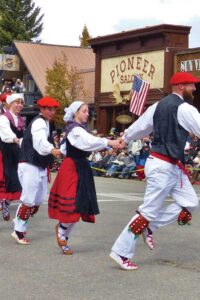 Drake has been leading the Trailing of the Sheep event for the past 10 years of the festival’s 30-year history, and though she wouldn’t tell me what her favorite event is—“That’s like picking a favorite child,”—she did tell me that she feels participants are really taking the time to engage with the festival and all it has to offer. In this way, they are helping Drake and the rest of the team keep the history alive.
Many people who are longtime festival goers spend most of their time on Buttercup Road in Hailey where the Sheepdog Trials are hosted. Here, the U.S. Border Collie Handlers Association presents the National Point Qualifying Sheepdog Trials to demonstrate who really runs the show: these incredibly well-trained dogs. Their talents, instincts and responsiveness are on full display as they demonstrate herding skills.
And then there are those who come from far and wide to indulge in their love of lamb, enjoying mouthwatering sample bites from all the best chefs in the Valley, as well as delicious lamb dishes available at booths and food trucks at the Lamb Fest.
Drake described their three-pronged approach to continuing this important cultural education. First, the festival itself offers classes of all kinds to its attendees, including those on knitting, cooking and sheep shearing. In addition, there are broad topic Q&As with local ranchers who can speak not only to the history of sheep ranching and the festival itself but how this industry continues to thrive both agriculturally and in the arts.
Second, Drake outlined the “Sheep Go to School” program in which the organization visits local fourth-grade classrooms to bring this unique history directly to the kids. Future plans include providing curricula for lower school grade levels, as well as middle school and high school.
Lastly, in this educational push, the Trailing of the Sheep each year offers the John Peavey Legacy Scholarship to a high school agriculture student. This year’s scholarship recipient is Dakota Monroe from Minersville, Utah, who wrote in her application essay: “The John Peavey Legacy Fund Scholarship matters to me because it represents the values I was raised with: hard work, community, stewardship, and dedication to the land.”
Monroe is representative of what the festival is trying to convey: That it’s important to understand the community you live in and the values that come with that knowledge and responsibility.
There are consistently about 1,200 sheep in the parade each year. The only time the festival has been canceled in 30 years was the year of the pandemic, 2020. Since then, the festival and the history, arts, and humanities it represents has remained a fun and educational way to celebrate a way of life that has sustained people and economies for generations.
Drake added: “This festival has become a respite from the real world for many people, and thus far, the changing political and economic climate hasn’t seemed to affect attendance.”