

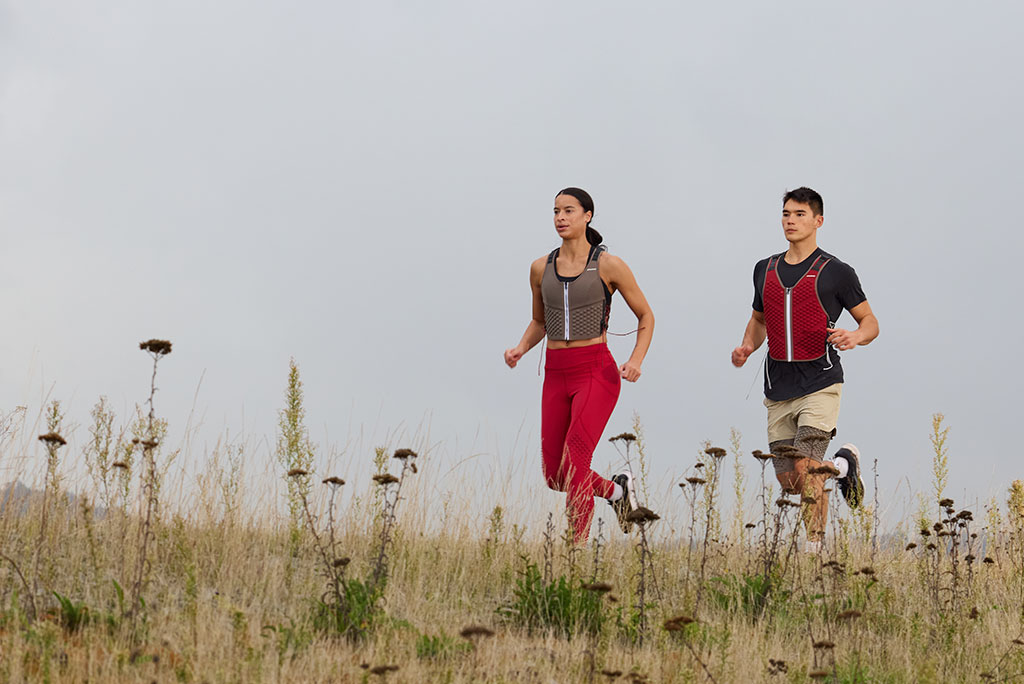
On cool mornings along the Wood River Trail, men and women in sleek and colorful vests move at a steady, purposeful pace. From slow jogs to brisk walks, each step has intent, and their vests signal a constant workout.
In gyms, at home, or on the trail, people are ramping up intensity in new ways.
Once for military and niche fitness, weighted vests, rucksacks, ankle weights, and belts now feature in mountain towns, gyms, and homes worldwide. They turn daily movement into something more demanding and purposeful. Called “rucking” or “weighted training,” the idea is simple: add load, increase effort, amplify results.
Inspired by military ruck marches—during which endurance and resilience are built under heavy loads—this approach has evolved for civilians seeking efficient, tough workouts. In this trend, walking becomes strength training. Hiking serves as conditioning. Ordinary errands offer fitness. This marks a shift in daily exercise.
According to MudGear.com, the primary difference between rucking and wearing a weight vest lies in how the weight is carried and how each adapts to different activities. Rucking uses backpacks to focus the load on your back, which can feel familiar to hikers and backpackers. A weighted vest, on the other hand, holds weight snugly and evenly around your torso, which can help maintain posture and balance during many movements. This means each approach may suit different preferences and activities better.
“We’re seeing more curiosity around both, especially from people who want to feel strong outside the gym,” said Meggie Rose, owner of The Mill in Ketchum. “Weighted vests tend to catch people’s attention first because they’re simple and familiar. Rucking is growing too, especially with people who hike and/or backpack, ski, or spend a lot of time outside and want their training to match their lifestyle.”
People in the Wood River Valley naturally incorporate outdoor activity into their daily routines. Carrying extra weight increases calorie burn, builds endurance, and strengthens bones—especially as people age. While these benefits are attractive, it is important to consider the risks.
Taking on extra weight still requires caution. Physical therapists and trainers warn that improper weight use stresses joints—especially knees, hips, and lower backs. Carrying too much or moving with poor posture alters stride and increases the risk of overuse injuries.
“The biggest mistake I see is going too heavy too fast; more weight isn’t better,” Rose said. “Another common issue is using weighted gear all the time and thinking it replaces strength training. Strength training builds muscle, protects joints, and keeps people resilient over the long term. Weighted walking adds challenge, but it doesn’t create the same strength stimulus. And finally, people forget that moving with extra weight is still stressful on the body. Your muscles and joints will need time to adapt.”
Who should adopt this trend, given the benefits and risks? According to Rose, it’s a wide range of people. Athletes like the added challenge. Older adults are drawn to it because walking can be a workout. It can also help maintain strength and bone health. Beginners are adapting because it adds a gentle challenge to daily activities.
Rose advises starting lighter than expected. Heavy weight is not necessary to be effective.
“I recommend beginning with short walks or simple movements, focusing on posture and how your body feels,” Rose said. “If you can’t move well or breathe comfortably, it’s too heavy. The goal is to feel challenged, not crushed.”
Rose added that a good rule of thumb is to start around 5-10% of your body weight. Use even less if you’re new. If posture changes or feels sloppy, that’s a cue to back off.
“The ‘right’ weight is the one you can control well,” Rose added.
In a landscape defined by elevation and endurance, the rise of weighted movement feels less like a fleeting trend and more like a true evolution—one that challenges us to redefine our limits, discover new strengths, and see how a simple shift can fundamentally transform our daily lives.