

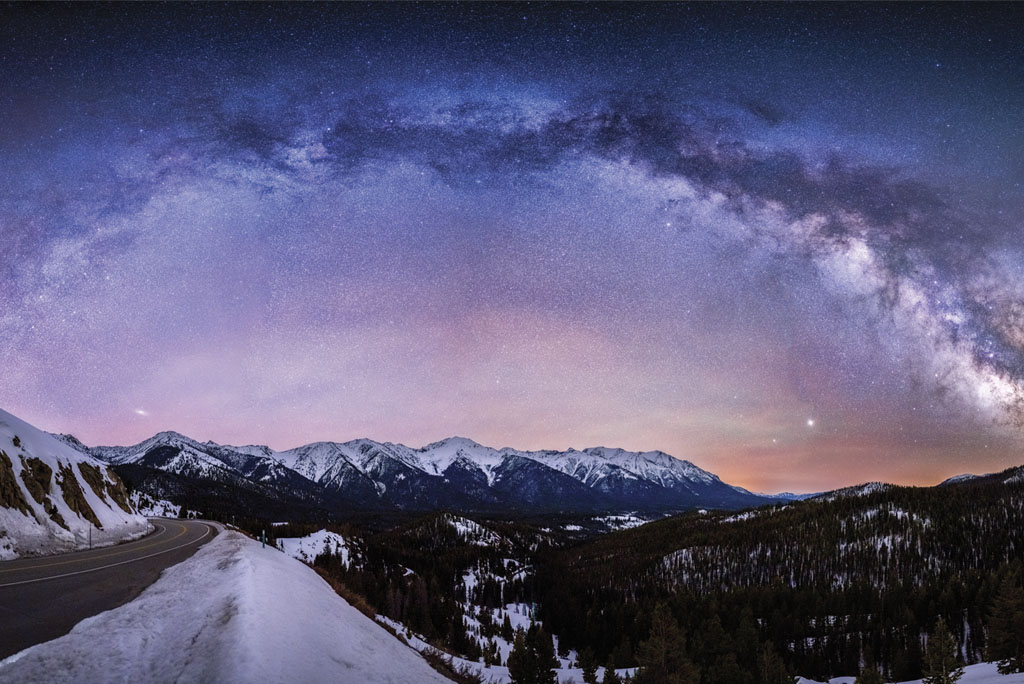
Long after ski lifts stop spinning and hiking trails empty, another attraction is quietly emerging above the Wood River Valley.
The Stars
Communities across the United States and the world are beginning to see darkness, once considered the absence of something, as an asset in its own right. As artificial light spreads across cities and suburbs, truly dark skies are increasingly rare, creating opportunities for tourism, education, conservation and business.
In the Wood River Valley, where visitors have long come for snow-covered slopes, blue-ribbon trout streams and alpine trails, a growing number of organizations and businesses now see the night sky as the region’s next natural resource.
The concept has become known as the “dark sky economy.”
This summer, Sun Valley Resort became the first resort in the United States to earn DarkSky Approved Resort certification from DarkSky International.
“In our community, we have people who have cared about dark skies for around 30 or 40 years,” said Betsy Siszell, sustainability manager at Sun Valley Resort. “People are passionate about this.”
Sun Valley had already made significant strides toward becoming a designated dark sky community. The resort completed much of the lighting overhaul mandated by the city of Sun Valley, aligning with efforts to reduce light pollution. When Siszell and James Brigagliano, the lighting program manager at DarkSky International, discussed the resort program, the conversation focused on initiatives specific to the resort and its facilities.
That timing proved ideal for evaluating Sun Valley Resort’s progress and comparing it against technical criteria and guidelines for high-quality lighting.
 The Five Principles
To be certified, Sun Valley Resort had to comply with the Five Lighting Principles for Responsible Outdoor Lighting, jointly published by DarkSky and the Illuminating Engineering Society. The light should be useful, targeted, low-level, controlled and warm-colored.
“We’re basically looking at the quality of the lighting and making sure it’s not overlit, and making sure it’s targeted,” Brigagliano said.
The Wood River Valley has been a stargazing hub for quite some time, with some of the first steps beginning in 1999, when Ketchum adopted one of Idaho’s first local dark sky ordinances and laid the groundwork for future protections.
In October 2017, the city of Ketchum earned separate accreditation as an International Dark Sky Community. That December, the Central Idaho Dark Sky Reserve was officially designated, stretching 1,416 square miles from the Wood River Valley up to Stanley and earning Gold-Tier Reserve status from DarkSky International.
The Emergence of Astrotourism
Astrotourism is defined as “tourism-related activities that involve or relate to the viewing of celestial objects and events.”
Unlike traditional tourism, which centers on daytime recreation, the dark sky economy encourages visitors to stay engaged after sunset through astronomy programs, guided stargazing, astrophotography, nighttime trail experiences and educational events. As a result, these activities extend visitor spending into the evening while reinforcing the area’s reputation for outdoor recreation and conservation.
Forbes, National Geographic, Condé Nast and multiple magazines have ranked astrotourism among the top travel trends.
“It’s definitely a growing industry, and at DarkSky, we’re always trying to figure out what’s driving this,” said Drew Reagan, senior marketing and communications Manager at DarkSky International. “People are seeking authentic experiences, and there’s a lot of astrophotography out there.”
To create darker skies, the first step is to eliminate light pollution, defined as the inappropriate or excessive use of artificial light, including glare, skyglow, light trespass and clutter.
Astronomers have long recognized central Idaho as one of the country’s premier places for observing the night sky because of its high elevation, dry climate and relatively limited light pollution. Those same conditions benefit wildlife, improve human health and preserve an experience that many Americans rarely encounter—genuine darkness.
For conservationists, protecting dark skies often aligns with broader environmental goals.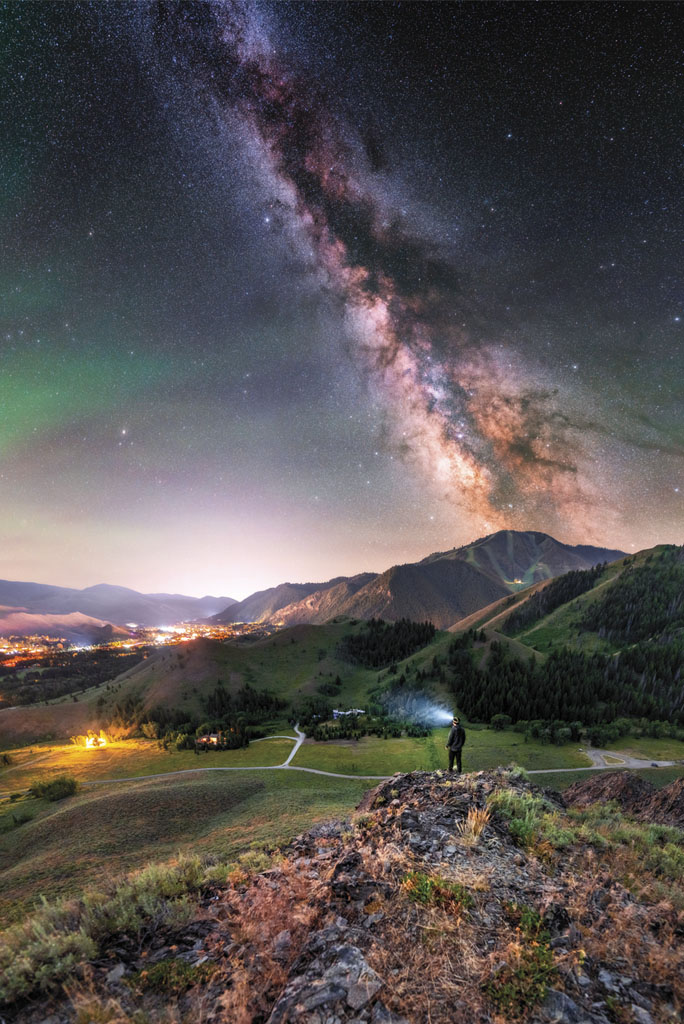
Excessive outdoor lighting can disrupt migratory birds, insects and nocturnal mammals while wasting energy and diminishing the character of mountain communities. To reduce these impacts without sacrificing public safety, shielded fixtures, warmer-colored lighting and thoughtful planning can help.
According to Globe At Night, an affiliate of DarkSky International, light pollution has been increasing 10% each year.
“This is also another sustainability feature for tourists,” Reagan said. “DarkSky wants to see a lighting revolution.”
The Observatory, A Viceroy Resort
While Sun Valley Resort is the first to receive this certification, it isn’t the only business to feature ways to gaze at the constellations. The Observatory, A Viceroy Resort, is making astronomy and stargazing a core part of its identity with a rooftop observation deck envisioned as a celebration of the extraordinary environment.
“Rather than simply acknowledging the night sky as a backdrop, we have integrated it into the guest experience through design, programming, storytelling and partnerships that encourage exploration of both the landscape and the cosmos,” said Euan Taylor, General Manager at The Observatory, A Viceroy Resort. “Our goal is to help guests experience Idaho’s dark skies not as an attraction, but as a defining characteristic of the destination itself.”
Economic Impact
The economic implications are significant.
Unlike many tourism amenities, dark skies require relatively little infrastructure. Communities can improve the visitor experience through responsible lighting ordinances, public education, interpretive programming and partnerships with local businesses, rather than large-scale development.
Restaurants can host astronomy dinners. To wit, Galena Lodge, north of Ketchum, has been hosting full-moon multi-course dinners where guests can stargaze since the early 2000s.
Hospitality providers are finding that dark skies can open the door to new opportunities, from guided tours and educational programs to wellness retreats and astrophotography workshops. These offerings not only boost year-round visitation and benefit the local economy but also promote environmental stewardship.
The result is an attraction that benefits multiple sectors while preserving one of the Wood River Valley’s defining qualities.
FIVE LIGHTING PRINCIPLES FOR RESPONSIBLE OUTDDOR LIGHTING
Jointly published by DarkSky and the Illuminating Engineering Society, the following are the five principles that the Wood River Valley area, Sun Valley Resort and other areas abide by to become certified by DarkSky.org. These principles are also useful for personal use at a private residence.
- Useful: Use light only when needed. All light should have a clear purpose. Consider how the use of light will impact the area, including wildlife and their habitats.
- Targeted: Direct light so it falls only where it is needed. Use shielding and careful aiming to direct the light beam downward so it does not spill beyond where it is needed.
- Low Level: Light should be no brighter than necessary. Use the lowest light level required. Be mindful of surface conditions, as some surfaces may reflect more light into the night sky than intended.
- Controlled: Use light only when needed. Use controls such as timers or motion detectors to ensure that light is available when it is needed, dimmed when possible, and turned off when not needed.
- Warm-colored: Use warmer color lights where possible. Limit the amount of shorter-wavelength (blue-violet) light to at least what is needed.