

The earliest Western pioneers of the Wood River Valley were a tough lot. The first local inhabitants of the late 1870s and early 1880s encountered tempestuous springs, moody autumns, and winters that could be brutally cold, driving the less-hardy newcomers away. It was, ultimately, a survival scenario, requiring that families work together to persevere through Mother Nature’s myriad unforgiving and unpredictable challenges.
Long before roads were built, even before the arrival of the great Iron Horse to the Wood River Valley in 1883 to serve the burgeoning mining industry, families worked the land, ran cattle, mined mountains and built homesteads as they established a foothold in this Northern Rocky Mountain paradise. Homesteading, however, comprised more than the felling of timber, the horse-drawn transport of supplies to a homesite, or the construction of houses and outbuildings. Making a home also included the beautification of the environment in which early inhabitants toiled, lived, loved, and died.
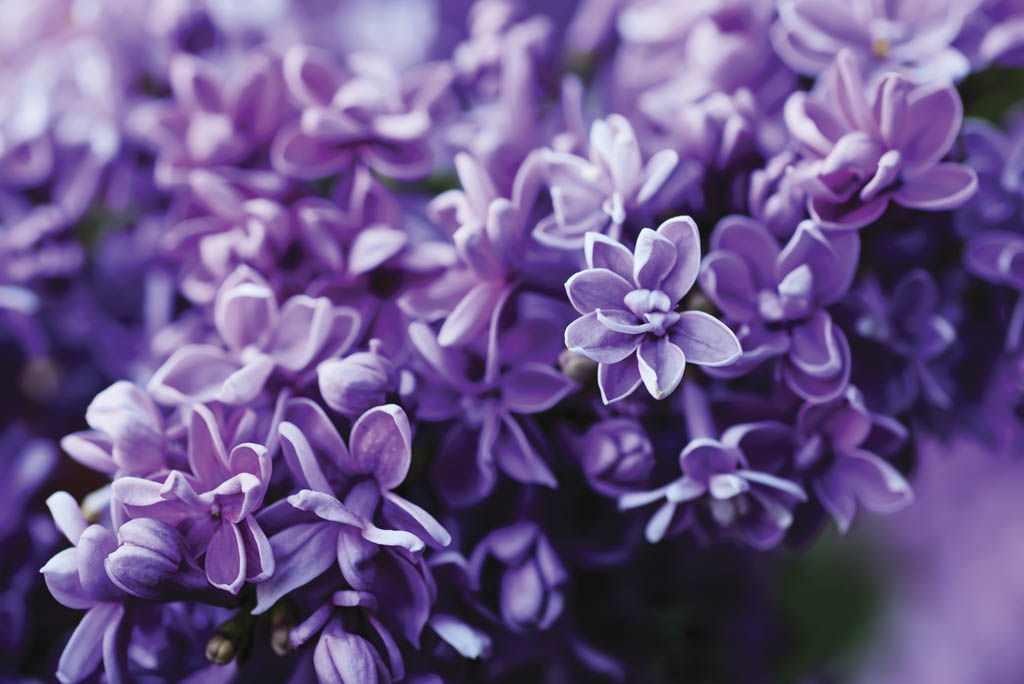
To this day, remnant evidence of this era can be seen sprinkled throughout the Wood River Valley and surrounding mountain communities in the form of lilac bushes, perennial proof of a pioneer presence long past that continues to beautify yards, fields, farms, and communities with the unmistakable scent that wafts along mountain breezes each spring.
On May 1, 1881, after an arduous 25-day wagon journey from Ogden, Utah, Michael Brown bounced uncomfortably along a muddy two-track freight trail toward a low sagebrush saddle. As he crested the ridge, he was greeted with a view that profoundly affected him. In front of him stretched a verdant valley, replete with numerous spring creeks, a cottonwood tree-lined river, celadon sagebrush-blanketed hills and snow-capped mountains far to the north.
Mary Brown McGonigal, Brown’s daughter and local pioneer historian, recalled her father’s story in her informative book, “Spring of Gladness: Reminiscences of Pioneer Life in the Wood River Valley.”
“The sight I saw to the north almost stopped my breathing,” Brown reportedly said from his viewpoint on what has long been referred to as Timmerman Hill. “A most beautiful valley lay ahead, untouched by man’s cultivation. As I looked down on the valley floor, the native rye grass was waving in that mild breeze and seemed to appear as a lake of blue water.”
The beauty and majesty of the valley had a similar effect on most of the early valley visitors, whether they were prospectors of Idaho’s Gold Belt, immigrants adventuring farther west to seek their fortune or aspiring ranchers of the cattle and pigs required to supply the exploding mining camps of Broadford, Jacob City, Bullion, Doniphan, Deer Creek, Hailey, Ketchum, Galena, Vienna and Sawtooth City among many others.
These communities began as mining camps, and where quality ore was unearthed, a level of economic stability and the potential of a promising future resulted in miners collecting their families to join them. While the men worked in the mines, women were tasked with homemaking and introducing a level of civility and culture to the townships growing quickly around them. One way this was accomplished was the beautification of yards surrounding the valley’s ever-multiplying log cabins.

Soon, lilac bushes began to dot the yards of homesteads as young starts were delivered by train and the endless trail of Conestoga wagons that snaked through the Western prairies. Within a few short years, young shoots had matured into flowering plants, and the perfume of the hardy, alkaline-soil-loving flora was ubiquitous throughout the Wood River Valley. The addition of natural beauty and springtime sweet scents softened the rough edges of the rugged valley communities and added a pleasant aspect to pioneers’ daily lives.
Lilacs, a genus of deciduous shrubs and small trees, are not native to the Northern Rockies or North America for that matter. In fact, lilacs are a member of the olive family (Oleaceae) and are native to Eastern Europe, specifically the Balkans and Carpathian Mountains of Romania and Turkey, Ukraine, across the Himalayan range from Pakistan to India, Nepal, Tibet and Eastern Asia, including China, Mongolia, Korea and Japan. Botanical experts report that there are 12 recognized species with over 200 additional cultivated varieties, many of which were developed by the French Lemoine family between 1876 and 1955.
The common lilac (Syringa vulgaris) which is most prevalent in the Wood River Valley and often lives for well over a century, should not be confused with the Idaho State Flower, syringa, which is a syringa in common name only.
Lilacs, known for their durability in harsh climates have a remarkable history across the globe. These headily scented flowers were originally introduced to the courts of Vienna, Austria, in the 1500s and quickly spread in popularity through Europe, ultimately being shipped across the Atlantic Ocean to North America in the 1600s. In fact, by the time of the Revolutionary War in 1776, lilacs had long been ensconced throughout the colonies as settlers desired to bring remembrances of the Old World to their homes in the New World.
The earliest record of lilacs arriving in the West is attributed to Mary Charlotte and Philip Foster who brought lilac starts with them on a ship that sailed around the Cape of Good Hope in 1843. This pioneering plant was carefully nurtured in their Oregon pastureland along the Oregon Trail.
Lilacs were also a common subject matter of essayists, poets and artists in the late 19th and early 20th centuries. Among many others, Henry Wadsworth Longfellow, Louisa May Alcott, Walt Whitman, Henry David Thoreau, Gustave Kline and Claude Monet celebrated the flowering plants literally, figuratively, artistically, and in song.
Whitman, in his “When Lilacs Last in the Dooryard Bloom’d,” employed lilacs as a figurative reference to Abraham Lincoln and his unfortunate passing in 1865, coincidentally the same year that the first mining claim was filed in Blaine County by Mathew Hale Williams at Rocky Bar.
Lilacs serve many diverse purposes in addition to having provided natural beauty and ornamental landscaping for the early pioneers. The flower’s perfume-like odor served not only to sweeten the spring breezes but also to conceal odors, especially around outhouses. Phenological data confirms that the blooming season of S. vulgaris commonly coincided with the melting of winter-long aggregation of sludge waste in privies, thus leading to their occasional reference as “Outhouse Flowers.”
Lilacs were also used most famously in the Victorian Era and in the early days of the American West to mask the scent of death and decay before embalming was standard practice. This is one reason they are commonly associated with funerals and present in many of our local cemeteries, including those in Picabo, Bellevue, Hailey, Ketchum and other less-well known burial sites scattered throughout the Wood River Valley, both public and private.
Many old wives’ tales surround this remarkable plant. Common pioneer knowledge suggested that it was unwise to bring lilacs inside a home as they would attract fairies and fairy mischief, which was to be avoided at all costs. And though lilacs are naturally four-petalled blooms, occasionally one might encounter a five-petalled flower, which was reported to grant the discoverer good luck if ingested.
Lilacs also provide important medicinal and pharmacological benefits, many of which early valley inhabitants likely were familiar with. Lilacs can be used to treat bronchitis, diarrhea, fever, conjunctivitis, myocardial ischemia and infections. Additionally, they contain anti-inflammatory, antioxidant, antihypertensive and antifungal properties.
Early settlers commonly used lilacs to make syrups and jellies, which complemented many other foraged and cultivated regional edibles of the time, such as rosehip, chokecherry, wild onion, nettles, fern tips, huckleberries, wild raspberries, wild strawberries and myriad fruit trees.
The symbolism of lilacs, specifically based on color, would have been well-known by early valley residents. Purple lilacs were said to portray the concepts of first love and romance. Magenta lilacs conveyed a sense of deep passion. White lilacs reflected innocence, purity and chastity and were often used in wedding contexts throughout the Wood River Valley of the late 19th century and onward.
Today, it is easy to forget the generations that forged their lives—and our communities—in the Wood River Valley long before ski lifts ascended Ruud and Proctor Mountains, and Bald Mountain soon after. At that time, dependence on one’s neighbors wasn’t a consideration, but rather a requirement of survival.
If you pay close attention the next time you drive up or down the Valley, you will notice robust, verdant and briefly blooming purple, pink and white lilac bushes present in fields and pastures far from pavement or existing structures. These botanical remnants serve as lovely reminders that once upon a time, in that very location, an early resident of our treasured valley bent to his or her knees with a shovel, a lilac start and the desire to add a touch of beauty and humanity to what had previously existed as untouched wildness of the American West.