

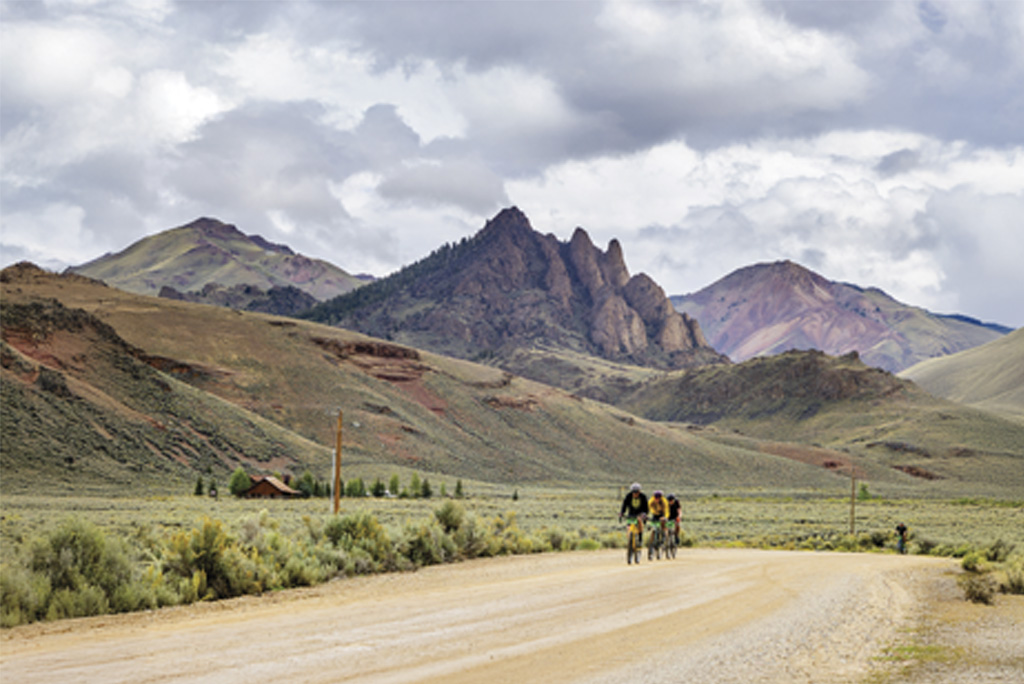
Grab a map of the Wood River Valley, and you’ll see State Highway 75 and the Wood River Trail cut up the low trench like an asphalt aorta—the only real option for a cyclist looking to eat up miles on pavement. Look closer, and you’ll notice a network of east-west capillaries that feed the dales and drainages as they tip towards the Big Wood River. These roads are rustic, occasionally rough, and ideal for riders with wider tires, lower gears and an itch to see what’s around the next corner.
No wonder gravel biking is ascendant in this part of Idaho: Its ideal arena was already written on the land. Idaho maintains almost 16,000 miles of unpaved local roads, according to state records—and that’s before you get into the federal routes run by the U.S. Forest Service and Bureau of Land Management, which administer more than two-thirds of the acreage statewide.
“The places you can get to on a gravel bike around here are just amazing,” said Jason Dykhouse, co-owner and bike shop manager at The Elephant’s Perch in Ketchum. These days, most of Dykhouse’s road clients have “seen the light” and gotten out on gravel, particularly since the pandemic. Last year, his shop sold more gravel bikes than traditional, non-electric mountain bikes for the first time, and it isn’t slowing down.
“It’s huge—and it is just getting bigger.”
He gets the appeal. Roadies will find gravel bikes more comfortable, thanks to their upright riding position and wider tires, which run at a lower pressure to take some of the sting out of harsh terrain. Mountain bikers will find them lighter, faster and overall simpler to use than their typical suspended rides. Dykhouse loves his on smooth singletrack, and around here there’s plenty of that.
In other words, a gravel bike makes rough roads fun and boring trails exciting. That combo makes gravel an intriguing discipline for cyclists on either end of the spectrum, whether you typically ride in spandex or cargo shorts.
 Katie Asselin-Gerry started on the road before trying mountain biking 10 years ago. Now, the Hailey resident mostly reaches for her gravel bike, competing in races across
the country.
“It’s a great equalizer—the middle ground between road cycling and mountain biking,” she said. Gravel riding “bridges the gap,” she noted, and it has made her a better cyclist overall.
“It’s gaining traction as its own sport, but the gravel bike in some form has always existed,” she said. Look at an old-school mountain bike: To her, a modern gravel bike takes the same concept and adds modern technology. Pricier bikes have more bells and whistles, but as long as you find something with adequate tire clearance, “you don’t have to spend a ton to get out there,” Dykhouse said.
“You can start small—any biking kit works,” said Maria Beattie, a Ketchum gravel enthusiast. “If you have a bike, a helmet and a Camelback, you’re good to go.”
Beattie rode the roads for years, but it was limiting. She stopped riding State Highway 75 because mounting traffic made excursions “a bit scary.” (Dykhouse says that’s an understatement; near his house south of Bellevue, it’s “terrifying.”) She began taking the side roads, linking them together to find places she would have otherwise never seen. On a gravel bike, any dirt road is an option, she said, “as long as they stay public.”
“There are so many opportunities for great rides,” she said. “When you want to get away from people, gravel is the way to go.”