


People love the beautiful, wild places in and around the Wood River Valley. The trails, peaks, and rivers of central Idaho provide a refuge in nature and relief from technology. Recreators can revel in a few hours, a few days, or even a few weeks being “out of service” and “off the grid.” However, new cell towers and satellite texting have made it harder to find places to be tech-free.
It is common to spend a workday on the computer, use wearable tech while exercising, prep dinner with a podcast, relax with TV, and set a smartphone alarm next to the bed. The average U.S. adult spends seven hours a day on screens, about half of waking life. Often, the media pushes products or ideas, limiting independent thought.
The digital dominance of modern life has led some people to seek ways to detox from digital life. Parents, especially, are eager to find ways to reduce the time children spend on technology. Some of the most compelling research on screens has been about children. Excess screentime has been linked to poor executive functioning, academic performance, and language development. It can also have detrimental effects on social and emotional growth, and increases the likelihood of obesity, sleep disorders, and mental health conditions.
In the Wood River Valley, there are resources—beyond the ready access to a wealth of outdoor activities—for individuals and families who want to increase feelings of belonging and well-being by reducing screen time. Organizations like TogetherWe and the 5B Digital Wellness Network promote mental health and well-being. Kirstin Emerson, prevention program manager at TogetherWe and a volunteer and founding member of the 5B Digital Wellness Network, understands that to balance screen time, families need alternatives.
“Parents seem to be more afraid of risky play than they seem to be of unstructured screen time, which can be much riskier,” Emerson observed. “Something I think we could do a lot better about in our community is providing safe containers for unstructured play … The ideas and opportunities are endless!”
The 5B Digital Wellness Network offers seasonal screen-free challenges full of tips on getting outside and connecting with the community. Emerson noted that more thoughtful use of technology by adults can have a big impact on children. “The more we all challenge our own habits, the more our youth will take notice, and the more our collective well-being will grow!”
Digital detoxes, at their simplest, are about reducing or eliminating screen time. When encouraging youth to reduce tech time, setting time limits for devices should be paired with instruction for responsible digital media use.
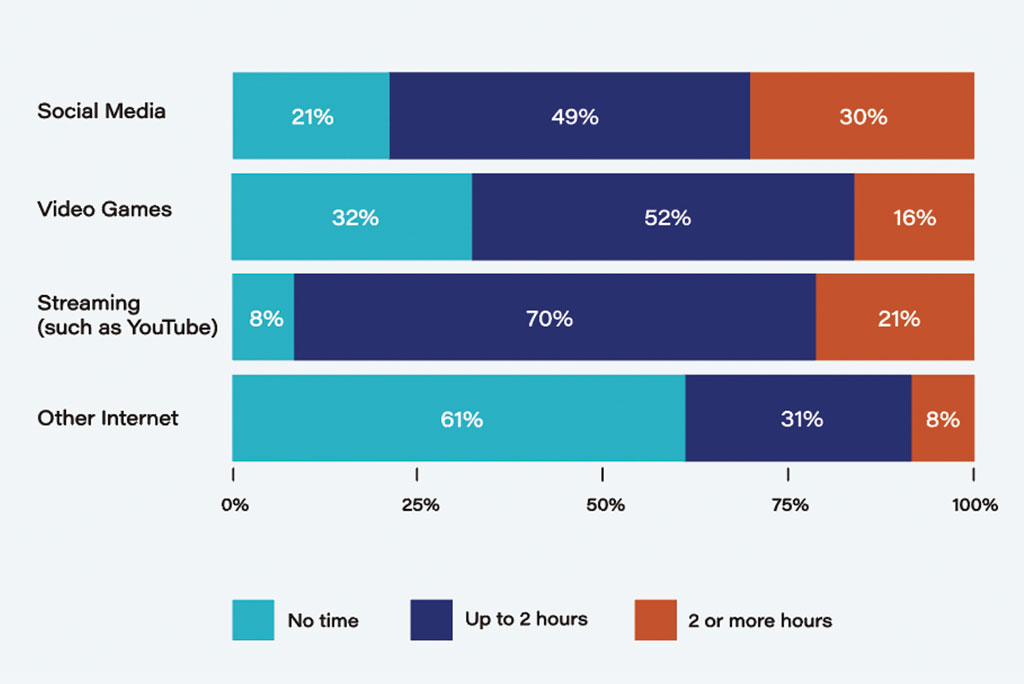
Monica Reyna, program director and educator at The Space, a hub of academic support, mentorship, and advocacy for teens, remarked: “We’re about connection, learning, and belonging, and phones often get in the way of those things. But these students will be living in a digital world that we cannot even imagine, so we need to coach them on the roles of technology in our lives and give them good skills.”
Reyna suggested that, rather than a blanket ban on technology, adults should focus on positive modeling and conversing with youth about screen time, particularly social media use, as it can have distinct, negative impacts. Emerson added that “social media has been designed to be addictive—literally changing our brains with the constant micro hits of dopamine. It gives you the illusion of being connected, while actually promoting loneliness.” This resulting lack of belonging is one of the most damaging impacts of spending too much time on screens.
Sarah Seppa, the director of community engagement at St. Luke’s Wood River, explained that St. Luke’s partnered with Communities for Youth to collect data from 6th-12th graders in Blaine County to measure youth well-being over the past three years. The data reveal that sleep and social isolation, which can lead to depression and even suicidality, are two significant factors impacting youth locally. Broader research indicates that screen use can be detrimental to both quality sleep and social belonging. Seppa noted that St. Luke’s “focuses on protective measures and things that have a positive impact on youth mental health” and work to bolster those opportunities. She shared the success of recent teen-led community events, which provide a venue for off-screen connection and belonging. She also highlighted that “82.5% of youth have never reported cyberbullying, and that is a bright spot to celebrate.”
The benefits of reduced screen time are increased physical and mental well-being, more focus and creativity, and more connections. Replacing even some of the seven hours that the average American adult spends on screens each day would improve personal and community well-being. While the benefits of digital detoxes abound, it is difficult to cut down on screen time. Luckily, there’s nothing we need to buy to make us feel better. Often, the simple, free solutions have the most impact: go outside, bring a friend, and leave your phone behind.
DETOX TIPS:
- Switch your phone to grayscale rather than full color.
- Leave your phone outside your bedroom at night.
- Lengthen the time each day between your last tech check of the evening and first check of the morning.
- Set time limits on apps.
- Turn off all notifications except for calls and texts from saved numbers.
- Go for a daily tech-free walk.
- Choose a day or half day a week to be totally tech-free.