


There is a moment every autumn in the Wood River Valley when summer quietly slips away. Overnight, the first patches of gold appear on the hillsides. Aspens begin to shimmer in the breeze, cottonwoods lining the Big Wood River start to glow, and Bald Mountain slowly trades its deep greens for warm shades of amber and yellow. For many, it is the most anticipated season of the year—a fleeting few weeks when Idaho seems to put on its grandest display before winter settles in.
Across the world, travelers plan entire vacations around the changing leaves. Japan’s maple forests, Germany’s woodlands and the colorful landscapes of eastern Canada have earned their reputation as some of the world’s most remarkable places to experience the changing season. In the United States, New England often claims the spotlight, with Vermont, New Hampshire and Maine drawing millions of travelers each fall. Yet the Mountain West has its own remarkable show, and Idaho quietly offers some of the country’s most breathtaking autumn scenery.
The stunning display of autumn color may feel like nature’s artwork, but the transformation begins with a carefully timed biological process. Throughout spring and summer, leaves are filled with chlorophyll, the green pigment that captures sunlight and fuels photosynthesis—the process trees use to create energy and grow. As autumn approaches and daylight hours shorten, trees begin conserving resources for the colder months ahead. Chlorophyll production slows and eventually stops, allowing the green pigment to fade and revealing the hidden colors that have been present in the leaves all along.
With the green no longer masking the other pigments inside each leaf, autumn’s famous palette emerges. Carotenoids—pigments found naturally in leaves throughout the growing season—reveal shades of yellow, gold and orange. Anthocyanins, produced by certain trees as sugars, become trapped in the leaves during cool, sunny autumn days, create the brilliant reds and deep purples seen in maples and oaks. Temperature, rainfall and elevation all influence the intensity of the colors, making every autumn slightly different from the last.
Eventually, photosynthesis comes to an end. Trees seal off the connection to each leaf, allowing it to drift gently to the forest floor.
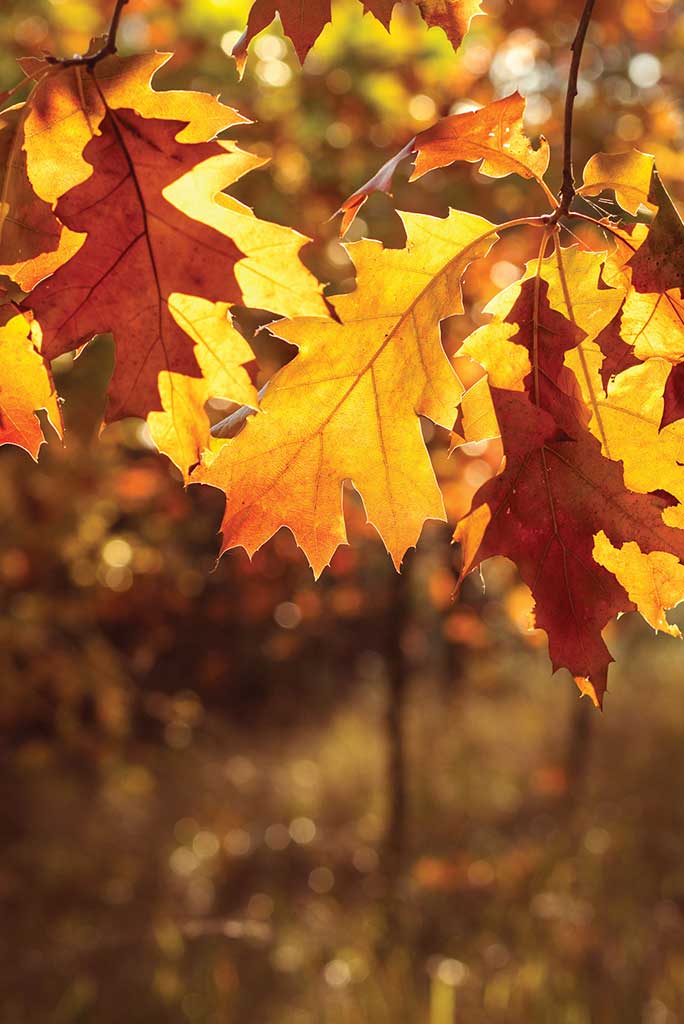

Perhaps it is this natural rhythm of release and renewal that makes autumn resonate with so many people. More than simply a change in scenery, fall has long represented a season of transition—a time to reflect and embrace the beauty of change. It is a season of release, gratitude and renewal. Trees let go of what they no longer need, conserving energy for the months ahead.
F. Scott Fitzgerald captured that feeling in “The Great Gatsby” when he wrote: “Life starts all over again when it gets crisp in the fall.”
Autumn invites a slower rhythm—cool mornings with a warm cup of coffee, afternoons on quiet trails and evenings gathered around a fire. It carries a sense of nostalgia while also hinting that something new is just around the corner.
In Idaho, the arrival of fall is written across the mountainsides, riverbanks and forests. Quaking aspens cover mountain slopes in shimmering gold. Cottonwoods brighten the riverbanks with ribbons of yellow, while Western larches—often called tamaracks—add a rare golden glow to the landscape. Unlike most evergreens, these unusual conifers shed their needles each year, transforming from green to radiant gold before winter arrives. Bigtooth maples, tucked into canyon walls, provide vivid bursts of orange that complete Idaho’s autumn color.
For visitors to the Sun Valley area, some of the best places to experience the changing season are only minutes apart. The drive over Galena Summit offers sweeping views of golden aspens framed by the Sawtooth Mountains. Bald Mountain provides panoramic overlooks where waves of autumn ripple across the landscape. The Sawtooth National Recreation Area, Draper Preserve, Townsend Gulch and Silver Creek Preserve each offer a different perspective on Idaho’s fall beauty, whether viewed from a hiking trail, a quiet riverbank or a scenic drive.
Idaho’s autumn display continues across the state, offering endless opportunities to explore its changing landscapes. Northern Idaho’s International Selkirk Loop, Kootenai National Wildlife Refuge and St. Joe River Scenic Byway showcase dense gold forests. Central Idaho’s Salmon River Scenic Byway and the roads surrounding Redfish Lake offer striking mountain scenery, while the Boise Greenbelt, Mesa Falls Scenic Byway, Harriman State Park, Thousand Springs Scenic Byway and City of Rocks National Reserve offer unforgettable views of Idaho’s autumn landscapes, from high mountain forests to winding river valleys.
That is what makes autumn so unforgettable. Perhaps the beauty of autumn comes from knowing it will not last. Before the leaves give way to winter, Idaho’s hillsides and forests offer a brief but unforgettable reminder of nature’s ability to transform.
As author Lauren DeStefano wrote, “Fall has always been my favorite season. The time when everything bursts with its last beauty, as if nature had been saving up all year.”