

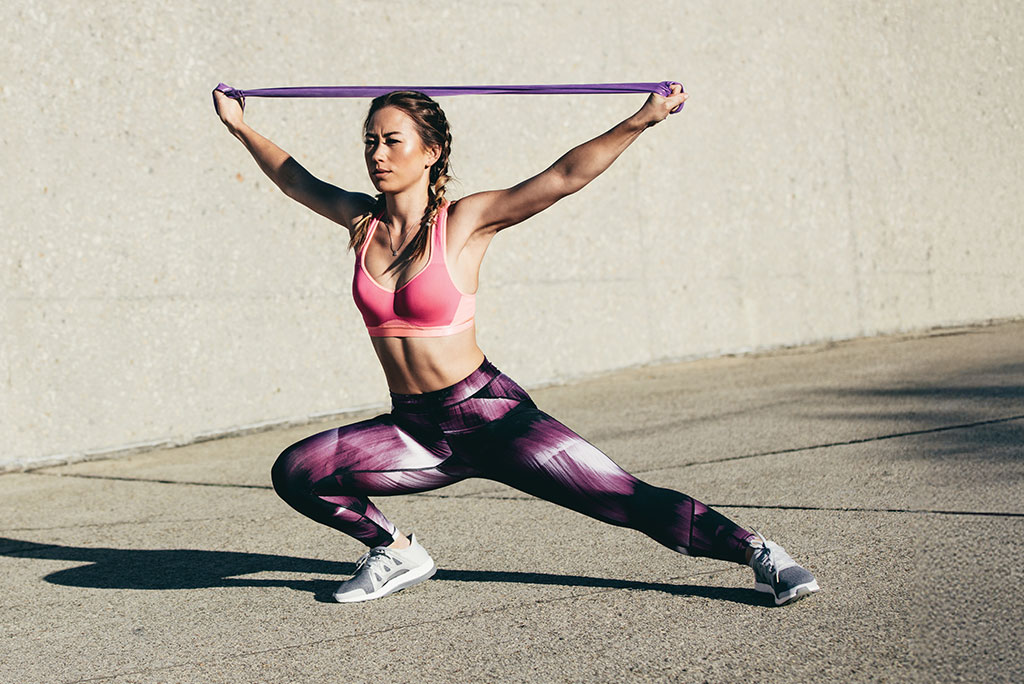
The first snowflakes haven’t even touched the Wood River Valley, but the race for winter readiness has already begun. In gyms, garages and living rooms across ski country, athletes and weekend warriors are lunging, planking and squatting with visions of powder turns and bluebird days. Yet, for many, the true test of the season won’t be speed or style on the slopes—it will be staying strong, balanced and injury-free long after that first chairlift ride.
Pre-season training should start sooner than most athletes think. The Wood River Valley is full of summer activities to keep in ski and snowboard shape. For mountain bikers and gravel riders, cardiovascular fitness is rarely the problem, but neglecting single-leg balance and hip stabilizers can be. Even fit riders benefit from two to three months of additional balance and strength work before ski season.
Hikers naturally train stabilizers on uneven terrain and downhill descents—movements nearly identical to skiing. For those not staying active, ramping up with weights too fast and too hard is a big mistake.
The key is to build gradually: focus on balance and control, let the neuromuscular system catch up before chasing heavy loads. Mastering one leg today can protect both knees tomorrow.
For the gym rats looking to get into slope shape, bodyweight squats and wall sits are always great introductions to build endurance and base strength.
For power, try single-leg Romanian deadlifts, lateral skater hops, goblet squats or plank with shoulder taps.
Landing prep exercises for balance are also great. Box jumps, Bulgarian split squats, medicine ball slams and single-leg hops can do the trick.
However, for injury prevention and performance, Jesse Foster, a physical therapist at St. Luke’s Wood River Medical Center in Ketchum, points to one standout move: the single-leg stand-to-sit.
This exercise involves standing on one leg and slowly lowering yourself into a chair, which challenges balance, hip stability and quad strength, while teaching proper knee alignment. “You can watch the knee,” Foster said. “The top cause of anterior cruciate ligament (ACL) injuries—which occur when the ligament inside the knee is torn—is when the knee collapses inward. This drill trains you to keep it tracking straight.”
This simple, no-equipment exercise is essential for athletes returning from knee injuries or anyone seeking better movement precision. Single-leg exercises, Foster emphasized, are critical for coordination and stability.
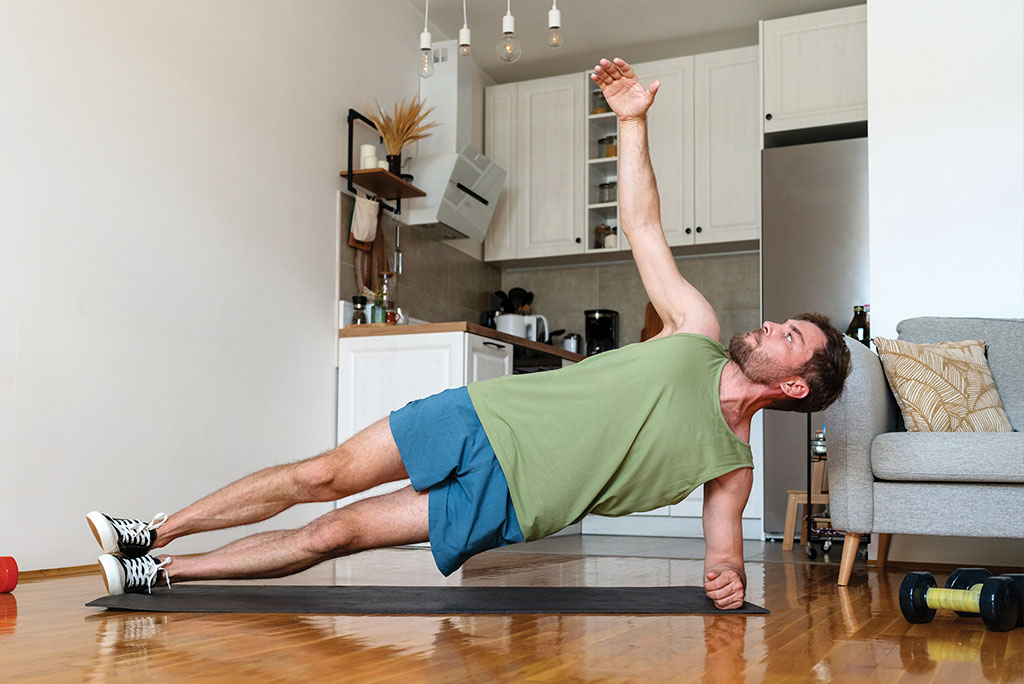
Foster’s second go-to for those with healthy shoulders: a side plank with hip abduction, which fires up hips, core and shoulders for full-body engagement. Hip abduction means lifting the leg sideways away from the body. “Your main balance muscles stay active, but now you’re adding control,” Foster said. Any unilateral (single-sided) work challenges stabilizers and keeps spinal load lighter—an advantage for real-world sports and adventure, where balance can make the difference between setback and success.
 Rebuilding Strength
Foster recommends rebuilding endurance before chasing strength: start with lighter weights and higher reps to avoid exhaustion, then increase resistance for power as loads feel easier.
“With lighter weights and higher reps, you build muscular endurance,” Foster explained.
He recommends starting with sets that feel manageable, focusing on finishing strong without pushing to exhaustion. Once those loads feel easy, reduce the reps to around 12 and increase resistance to build power.
“That’s when you shift from muscle endurance to muscle strength,” he said. “Before the season, push into power—lower reps, heavier loads, faster movements.”
That progression, from endurance to power, bridges the gap to the next essential: injury prevention through technique. Strength alone doesn’t prevent injury—technique does. “When you land and the knee collapses inward, the shin slides forward and rotates as the thigh shifts sideways,” Foster said. “That tears the ACL.”
Another frequent culprit is landing off balance or sitting back on impact, sending the lower leg shooting forward. Both movements strain the knee ligaments.
Throughout the season, Foster advises athletes to train landing balance: keep both legs active, keep the knees aligned over the feet, and keep the hips stacked over the tibia. “That’s how you protect the ligament,” he said.
Know Your Limits
Self-awareness, Foster added, is an overlooked part of staying healthy. Before every day on the mountain, he tells skiers to check in with their bodies and conditions.
“Know your strength levels and balance points—then reassess on the day,” he said. “If you don’t have enough strength yet, pick your conditions wisely.”
That might mean skipping heavy, wet snow days or avoiding hard, icy runs if knee pain or arthritis is a factor. Adjusting for fatigue, terrain, or visibility can be the difference between a great run and an injury.
“The danger comes when you’re in conditions or speeds that overwhelm you—when you’re exhausted, hungover, or it’s the last run of the day,” Foster said. “That’s when injuries happen.”
Even beyond the slopes, awareness matters. The parking lot, he noted, is one of the most significant fall hazards.
Gear and Technique
Equipment matters. Modern skis and boots have changed how people move on snow. Foster suggests working with an instructor or technician for the right fit, especially for those with arthritis. Even minor setup issues—like bindings too far forward or dull base bevels—can affect knee stress and control. For skiers with arthritis, equipment choice becomes even more critical.
“You need to be physically ready to hit your daily goal,” he said. “You need to be mentally sharp to tackle what’s ahead. And don’t forget hydration and fuel—running out of energy will shut you down.”
Because when skiing feels natural, it’s not about learning a new turn—it’s about showing up ready.
Balance and strength exercises
Single-Leg Stand-to-Sit
Stand on one leg and slowly lower yourself into a chair, keeping your knee aligned over your foot.
Side Plank with Hip Abduction
Hold a side plank and lift your top leg upward, keeping hips stacked and
ore engaged.
Bodyweight Squat
With feet set at shoulder width, bend at the hips and knees keeping your back straight. Lower yourself until thighs are parallel to the ground. Push through heels to return to starting position.
Single-Leg Romanian Deadlift
Stand on one leg, hinge at the hips, and reach your torso forward while extending the other leg behind you.
Lateral Skater Hop
Hop sideways from one foot to the other, landing softly and keeping balance with each jump.
Goblet Squat
Hold a weight at your chest and squat down, keeping elbows close and your spine neutral.
Plank with Shoulder Taps
Hold a plank and tap each shoulder with the opposite hand while keeping hips steady.
Box Jump
Jump onto a sturdy box or platform, landing softly with knees bent and chest lifted.
Bulgarian Split Squat
Place one foot behind you on a bench and lower into a single-leg squat on the front leg.
Medicine Ball Slam
Lift a medicine ball overhead and slam it to the ground with force, using your core and legs.
Single-Leg Hop / Landing Practice
Hop forward or sideways on one leg and focus on landing with your knee aligned and hips stable.