

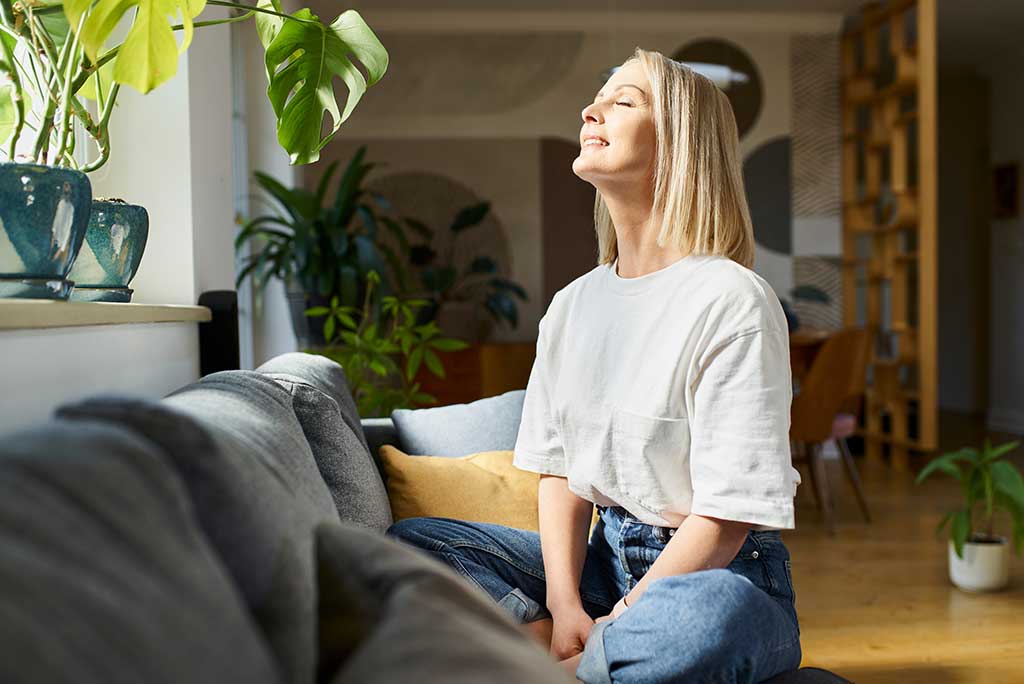
Wood River Valley residents are quick to talk about how good they feel after an invigorating hike in the beauty of the surrounding mountains.
But does your home make you feel that way? It’s a question more and more people are asking, and a growing number of builders, architects and designers are answering it with a concept called whole-home wellness.
“For us, wellness in a mountain home is not an amenity you add at the end,” said Jennifer Hoey, interior designer with Suedestudio.
Hoey designs for wellness from the first drawing. That means circadian lighting systems like Ketra, which tracks the sun through the day to support sleep and mood.
Because some clients come from lower elevations, Hoey includes oxygenation systems that help people acclimate and sleep, paired with air purification so the air inside is as clean as the air outside.
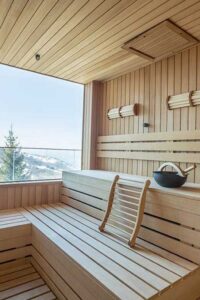 And recovery is simply part of how people live here: “Saunas, steam, infrared, and cold plunge come up far more often in our conversations than avoiding chemicals does.”
Wellness also lives in the surfaces. Hoey specifies American Clay, a breathable, living plaster that regulates moisture so bathroom mirrors don’t fog and can be repaired rather than replaced. She prioritizes bio-based, low-emitting materials for the things people are closest to—rugs, textiles, mattresses and finishes—to limit chemical exposure.
“The goal is always a home that works with the body, not against it.”
Allison Connolly, interior designer with Allison Paige, has more clients asking for dedicated spaces for reflection: meditation areas and yoga rooms. The equipment needs are minimal—a mat, certain pillows—but the approach is more contemplative.
“A room that’s aesthetically quiet,” Connolly said. “Natural finishes, soothing colors, natural fibers, wood that shows its natural grain pattern. Embrace Mother Nature as much as possible.”
She creates the mood through all the senses: a fountain for sound, an essential oil diffuser for scent.
Nick Gilman, president of NPG Industries LLC, has been remodeling homes since the 1990s, and he’s watched the trend toward healthier materials and systems accelerate dramatically in the last five years.
“People are more aware and interested in their immediate environment and its impact on their health and well-being,” Gilman said.
Achieving the ultra-high energy ratings of new construction is difficult in an existing home, so it’s a process of incremental gains.
“We remove all the old insulation and detail out every stud bay prior to installing the highest R-value possible,” he said.
High-level water filtration systems now use reverse osmosis, and Gilman marvels at how clean the water can
get: “The process filters to almost the level of distilled water, then reintroduces the minerals that make water healthy and flavorful.”
Rising temperatures and wildfire have become a primary driver towards air conditioning.
“You used to be able to rely on that Rocky Mountain air conditioning: open windows at night and, when it’s cold in the morning, shut all the windows for a perfectly comfortable house,” he said. “With higher temperatures and the prevalence of wildfires, clients now need AC just to have clean air and comfortable temperatures.”
Jolyon Sawrey, architect and owner of Vital Ink Environmental Architecture, says he asks why we do what we already do. Why have a crawl space? It’s a floating floor above an area prone to moisture and radon, collecting dust and dirt. Why use forced air heating, which blows hot air that collects at the ceiling while you sit 8 feet below, moving dust around?
“A radiantly heated home, tubes with transfer fluid in the slab, might be a better way to warm the body without moving dusty air around,” Sawrey said.
Instead of an air conditioner that extracts humidity and creates condensation, a radiantly cooled slab can hold the cool, much like an Anasazi sandstone structure.
Sawrey advocates thermal mass: heavy wood wall assemblies, heavy wood ceilings and thermal mass walls.
“It’s calming, feels genuine, and there’s a lack of fluctuation of temperature because of forced air,” he said. “Like a potter’s flywheel, it keeps holding the energy, and you don’t hear the furnace kicking on with radiant heat.”
Heat pumps and mini-split heat pumps are three to four times more energy efficient than gas-forced air or radiant heat. They’re affordable and vastly quieter than a forced air furnace.
Sawrey urges caution with some seemingly green materials. Recycled carpeting made from plastic pop bottles breaks down into microscopic plastic fibers when vacuumed, and carpet is a dirt collector. He recommends trading vinyl flooring for linoleum, natural material that lasts longer.
Sawrey suggests finishing walls with natural plasters, beeswax, carnauba wax and natural oils: “I prefer specifying materials that go into a home that I’d be willing to eat a tablespoonful of. So many of the construction adhesives, paints, polyurethanes and varnishes are toxic. A wool rug can be shaken on the patio and laid over a railing to let the sun sterilize it naturally, without steam cleaning with chemicals. Natural materials feel different, and the difference is calming.”
THE BIG THREE IN HOME WELLNESS
Air
Advanced HEPA filters and air quality sensors keep your indoor air clean and balanced ventilation incorporates heat recovery ventilators or energy recovery ventilators to continuously flush out stale indoor air and introduce filtered outdoor air.
Water
Advanced water purification systems remove toxins, allergens and impurities from your water that may prevent gastrointestinal and other chronic illnesses. Smart water filtration improves the water quality throughout the home, reducing the risk of contamination.
Light
Implementing smart lighting that mimics natural daylight helps to regulate your body’s sleep-wake cycle. Circadian lighting design which changes from morning to midday to afternoon to evening can affect energy, mood, productivity, focus and even cortisol levels.