

A hefty addition of basil to a piping hot margherita pizza; dill topped on tangy homemade tzatziki or inside buttermilk ranch dressing; chives that add a little bite to a baked potato with all the fixings—a sprinkling of fresh herbs adds brightness, complexity, and a crisp note to just about any dish. And, while the flavorful notes are a welcome, delicious bite, what may be even more satisfying than the aromatics is popping outside to cut your own from a lush, chef-inspired culinary herb garden. Whether a gardening pro or greenhorn, growing your own herbs is a great way to dive into homegrown aspirations. Or at the very least, jazz up your cooking and find more connection to where your food comes from.
Gardening in the high mountain desert climate of the Wood River Valley can be a challenge, but when done correctly, it reaps bountiful rewards from early summer through late fall. Dedicated farmers like Sara Berman and Ed Zinader, the wife and husband pair behind celebrated Squash Blossom Farm, a high-yield, small-scale farm at the mouth of Muldoon Canyon, know Idaho growing like the back of their hand. Their farm is now in its 10th season of providing vegetables to locals through farmers’ markets, Community Supported Agriculture (CSA) shares, and wholesale through restaurants.
 “This area has a unique growing climate that poses challenges and opportunities, too,” Sara says. “It is so short because we are at a high elevation and also have cooler temperatures than a lot of the rest of southern Idaho. We have to be really careful with our timing and maximize it, while not pushing things too early or too late.”
A Sun Valley native, Berman first became inspired by agriculture and sustainability in Harry Weekes’ advanced biology class at The Community School. After stints working at farms abroad and diving deeper into sustainable food systems in college, she decided to return to the area to be a part of the movement in her hometown.
“It is a wonderful community to do this sort of farming in because of the mentality of a lot of people who live in this area: they are people who are health-focused and interested in supporting local business, and value eating healthy local foods and recreating,” she says.
While Berman and Zinader and other incredible local farmers can no doubt provide hungry market goers with mouth-watering tomatoes and hearty greens all season, herbs are a fun and simple addition to your home garden, and according to Berman, a great place to begin.
“I love herbs,” Berman says. “They are one of my favorite things to grow, and I think herbs should be put on everything. Even though we have many acres of vegetables growing, I still grow pots of herbs on our back deck because I want to grab a bit and throw them on top of whatever I am cooking or mix them in.”
Growing Your Own
When starting your own culinary herb garden, the first decision and distinction to make is: perennial or annual? A variety of perennial herbs (meaning a plant that returns each growing season) thrive in the Wood River Valley climate and will come back each season. These make for a great addition to your summer garden beds for lovely landscaping combined with delicious flavor.
“Be sure and put them somewhere you want them long-term,” Sara says. “Herbs like chives, mint, oregano, thyme, and sage—a lot of those really woody plants—do okay through the cold winter here, especially if you cut them back a little bit before winter.”
If you plant them once, with a little TLC, you will have a happy, returning garden.
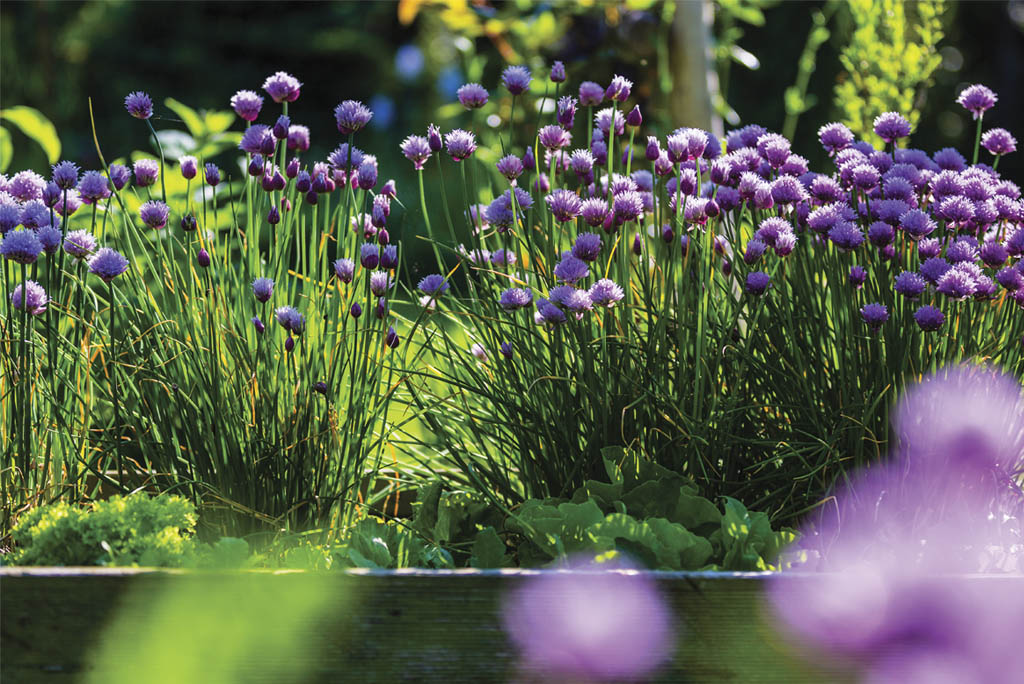
Chives may just be the most forgiving of all the perennial herbs. These quick-growing onion-like herbs are one of the first to grow in the spring. They are also topped with edible purple flowers that add a pop of color to your garden beds.
Oregano is also best suited for your flower garden or raised bed, thanks to its love of full sun. Although also a perennial, mint is a soloist. It will spread thanks to its underground runners and stems, so unless you’re hoping for a plethora of mint tea, opt for a singular pot where it can thrive as the star.
“Not only are they beautiful, but the herbs will flower, and pollinators love those flowers,” Sara says. “Most of these are also relatively low water. If you have automated water, it is taken care of with your sprinkler.”
After each season, cut your perennials down to soil level, which will give them a better start come spring thaw.
Annuals complete their entire growing cycle in one season and do not regrow each year. Think basil, parsley, cilantro, and dill. For these herbs, create a back porch herb oasis either in a raised bed, a large pot, or even a windowsill garden with plenty of light.
Berman explains that parsley is hardy and can handle a variety of weather. Its germination period is slow (around three weeks) but it can handle cold nights, so get parsley going early. Cilantro, however, is great in the early summer and late summer, but in mid-summer, peak heat, it tends to bolt, a survival mechanism where the plant stops producing leaves and instead grows a thick stem and flowers. “As soon as you see it bolting, cut your losses and harvest what you can and plant again in the late summer,” she says.
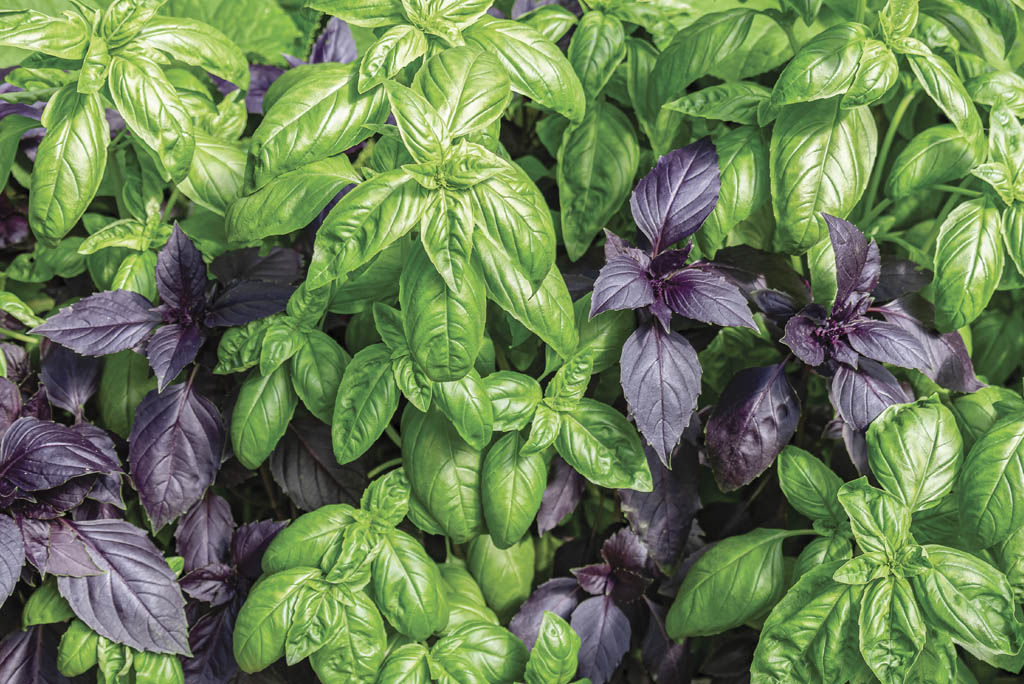
If caprese salads, pesto, and Italian cuisine are high on the summer menu, don’t skimp on the basil plants. They need a warm spot, but given the right conditions and some maintenance, they can and will thrive in Blaine County summers.
“Basil is the fussiest,” Sara says. “Don’t be afraid of harvesting it pretty heavily.” Some people get nervous, she explains, about harvesting it too much. But her go-to is to cut the herb in half every week or so at the big stem. “This makes it healthier and more robust.” And that means more basil.
The beauty of an herb garden is, all things considered, lower maintenance. For your landscape perennials, a good watering with the rest of your flowers is all it needs to thrive and produce tasty aromatics. For your culinary raised beds and pots, whichever you choose, start with an organic fertilizer plant food. But don’t overthink it. “Leafing crops are so much lower maintenance than fruiting crops,” Sara says.
And when it comes to water, opt for keeping them relatively moist, meaning not super dried out or super saturated. Berman’s tip: Just water with a watering can for small herb gardens. If you have more going on, you might need a drip system. Pots will need some drainage to keep everything from getting waterlogged, too.
A Little TLC for All
Sometimes we just need to get our hands dirty and dig in the dirt. And there is science to back it up. Study after study boasts the incredible health benefits of spending time working in a garden. The act of tending a garden has been shown to reduce anxiety, boost cognitive function, and provide a bit of physical fitness. A study from the University of Colorado Boulder found that new gardeners significantly decreased stress and anxiety, while increasing physical activity and fiber intake.
“Working and having contact with plants is always healthy, mentally and physically, and then I think tuning in to food production, even on the smallest scale, and how that relates to how you are preparing your food, is so important,” Berman says.
Access to something as simple as basil and parsley grown in your backyard can also add creativity to cooking. Involve the family in each meal, whether by having the kiddos pick the basil or asking what herb might be best for a certain dish.
Out of cooking ideas? Start with what’s ready to harvest. If your cilantro is going wild, throw a cup of packed cilantro in a blender with a half cup of sour cream or Greek yogurt, garlic and lime juice to taste. The results? A creamy sauce that’s perfect for tacos, salads, and more.
The flavor will speakfor itself
“The flavor in plants is one of the last things that is developed in the plant’s life,” Berman says. “A healthy crop will basically have all systems functioning in line and then develop flavor. So, inherently, the healthiest, most nutritious crops are also the best tasting.” That means your backyard basil, when ready to harvest, is probably the tastiest you’ve had. And you grew it!
Whether a small windowsill garden teeming with sprouting herbs or raised beds sharing room between squash, cilantro, cucumbers, and whatever else your garden grows, herbs can spark creativity in the kitchen and in the garden. ï
WHERE AND HOWTO PLANT
Start your garden indoors! Use quality grow lights or a greenhouse for up to 8 weeks before your last spring frost or even as a season extender —for starts in the spring and for crops to mature in the fall.
Do not transplant outdoors until all danger of hard freezes is over! Be patient.
Elevate! Invest in raised beds if possible! Idaho high country soil can be rocky and often drains poorly, and a raised bed (wooden or metal) will keep your herbs much warmer in the springtime.
Cover and protect! Make sure you have hoop covers draped with frost cloth or clear plastic for early spring and late fall when the big temperature swings are likely and a sudden frost could damage uncovered buds.
Maximize your sun exposure! Your herbs need 6-8 hours of direct sunlight every day to thrive. Position your garden against south- or west-facing foundations or wood fences which will absorb heat at night and release it during the colder nighttime hours, protecting your soil and your plants.
RECIPES FOR A CHEF’S GARDEN
Watercress Sauce
Ingredients
1 onion, peeled and roughly chipped
1 tablespoon olive oil
1 cup of watercress
1 1/4 cups stock
sea salt
Blend onion in a food processor until finely chopped, heat oil in a pan and cook onion for 10 minutes until softened. Blend watercress in the processor until finely chopped and add it to onion. Cook for 5 more minutes. Stir in stock and simmer for 15 minutes.
Serve with grilled salmon or add pine nuts, lemon zest, and prated Parmesan for a pesto, add to eggs, or use as a base to a stuffing for lamb.
 Creamy Cilantro Dip
Ingredients
1 cup packed cilantro leaves
2 garlic cloves
1/2 cup Greek yogurt
2 tablespoons lime juice
1 tablespoon olive oil
Salt to taste
optional: 1 jalapeño, 1/4 teaspoon lime zest
Combine the cilantro, garlic, and jalapeño (if using) in a food processor and pulse. Stir in remaining ingredients.
Serve as a dip with chips and crackers, top salads, grilled fish, and tacos.
Parsley sauce
Ingredients:
1-1.5 cups tightly packed parsley
2 cloves garlic, peeled
Juice of 1/2-1 lemon
2 tablespoons olive oil
sea salt
In a food processor, add the parsley, garlic and the lemon juice. Blend to finely chop. Season with sea salt and black pepper. Then, with the processor running, gradually pour in enough oil until you have your desired consistency. Add more lemon juice to taste.
Serve over grilled fish, dress a salad, add mayonnaise or Greek yogurt to make a dip, or liven up casseroles by adding chopped anchovies and mustard.
Five flavor yogurt dip
Ingredients:
1 cup plain or Greek yogurt
1/2 cup roasted tahini
1/2 teaspoon salt
2 tablespoons lemon juice
1 garlic clove, minced
2 tablespoons fresh dill (or parsley), minced
1/4 teaspoon cayenne
Mix all ingredients in a bowl. Refrigerate for at least 1 hour to allow flavors to blend.
Serve with pita or carrots, top baked potatoes, grilled lamb, chicken, or as a sandwich spread.